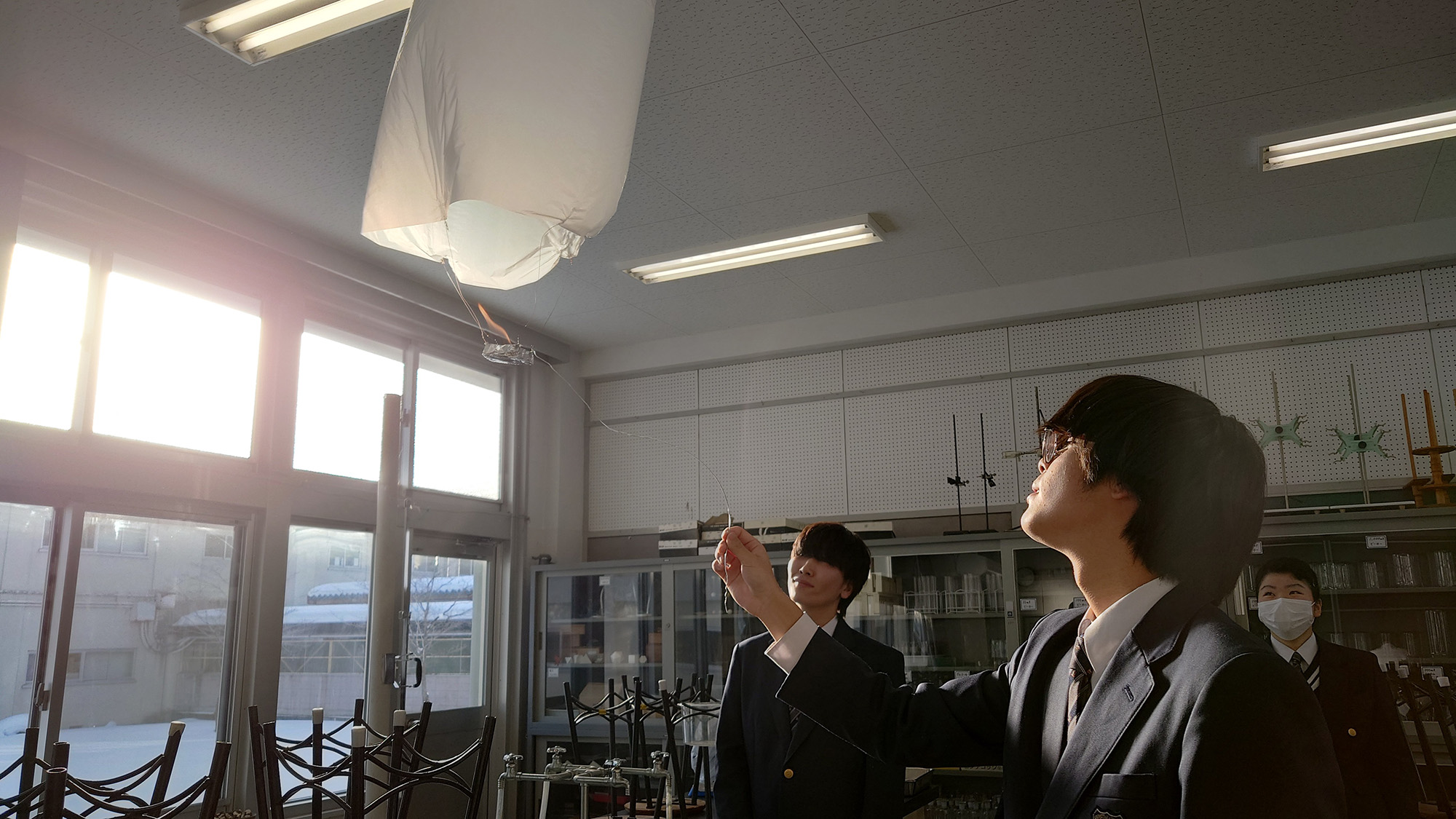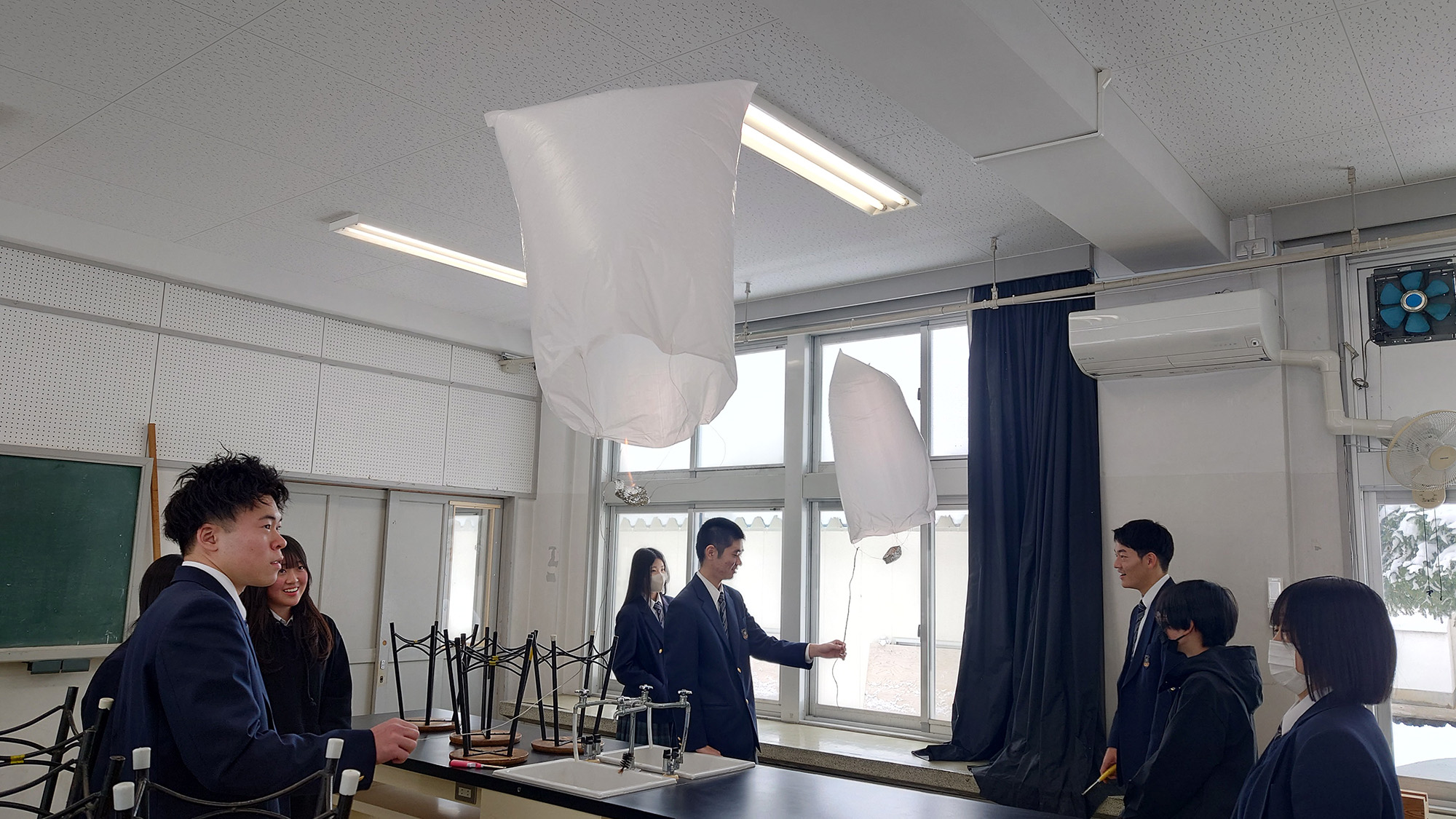
3年生の必修科目である地学の授業では、空気の性質や熱の働きを体感的に理解することを目的に、熱気球を作成して飛ばす実験を行いました。身近な材料を用いた実験から、実際に人を乗せて飛ぶ気球について考え、自然の力を利用することで人間の生活がどのように便利になっているかを学びます。
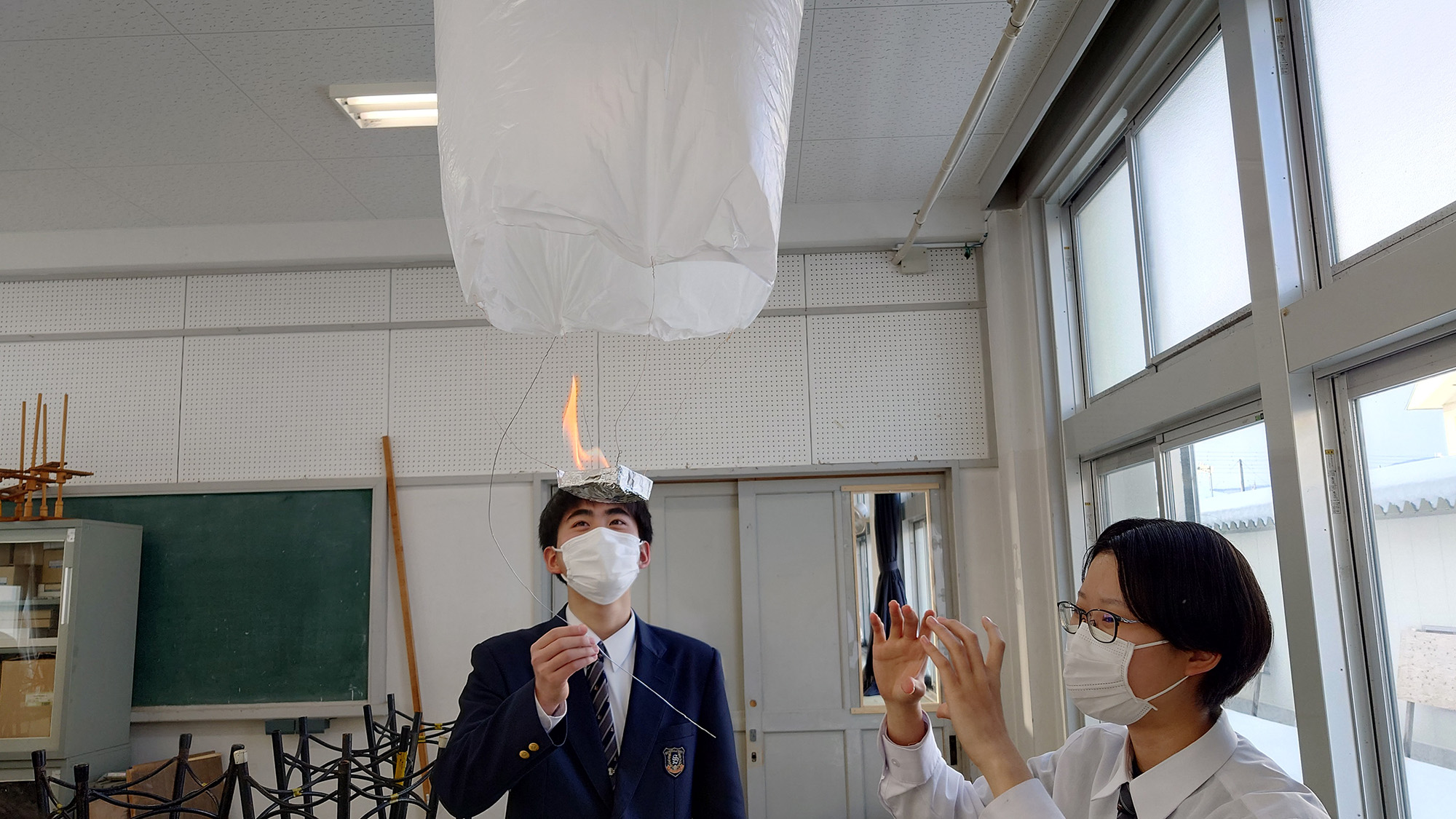
生徒達は少人数のグループに分かれ、ゴミ袋、エナメル線、アルミカップを用いて気球の形に組み立てました。アルミカップに乗せた脱脂綿にエタノールを染み込ませて着火し、実際に気球を飛ばします。熱によって膨張していく空気の質感を袋越しに手で触れ、空気の変化を体感しました。うまくいけば気球は2メートルほど上昇します。思うように飛ばず苦戦するグループもありましたが、原因を考えて作り直すことで成功させました。
In the 3rd-year required Earth Science class, students conducted an experiment in which they made and flew hot-air balloons to understand the properties of air and the effects of heat through hands-on experience. Through experiments using materials around us, they learn how our lives have become convenient thanks to the power of nature. This time, they learned how balloons that can carry people work through this experiment.
Divided into small groups, each group built a balloon shape using garbage bags, enameled wire, and an aluminum cup. They lit cotton wool containing ethanol in the cup and then flew the balloon. By touching the bag with their hands, they felt the air expanding due to heat and experienced changes in the air firsthand. The balloon was supposed to rise about two meters if successful. While some balloons didn’t float at first, they finally succeeded in flying the balloon by thinking about the causes and rebuilding them.